Signs of Moisture Damage to Address Before Painting
Skipping repairs and trying to paint over moisture damage leaves stains, peeling, and mold risk on walls and ceilings. Dunedin House Painting Company helps Dunedin, FL homeowners, landlords, and businesses spot water issues first, then restore surfaces with proven prep so coatings last in Florida humidity.
Key takeaways
- Soft, stained, or bubbling paint usually means active or past moisture.
- Fix leaks, drying, and substrate repair before any primer or topcoat.
- Florida humidity and stucco need extra inspection at joints and base walls.
- Local prep and coatings beat covering symptoms that return after rain.
Why should moisture problems be repaired before painting?
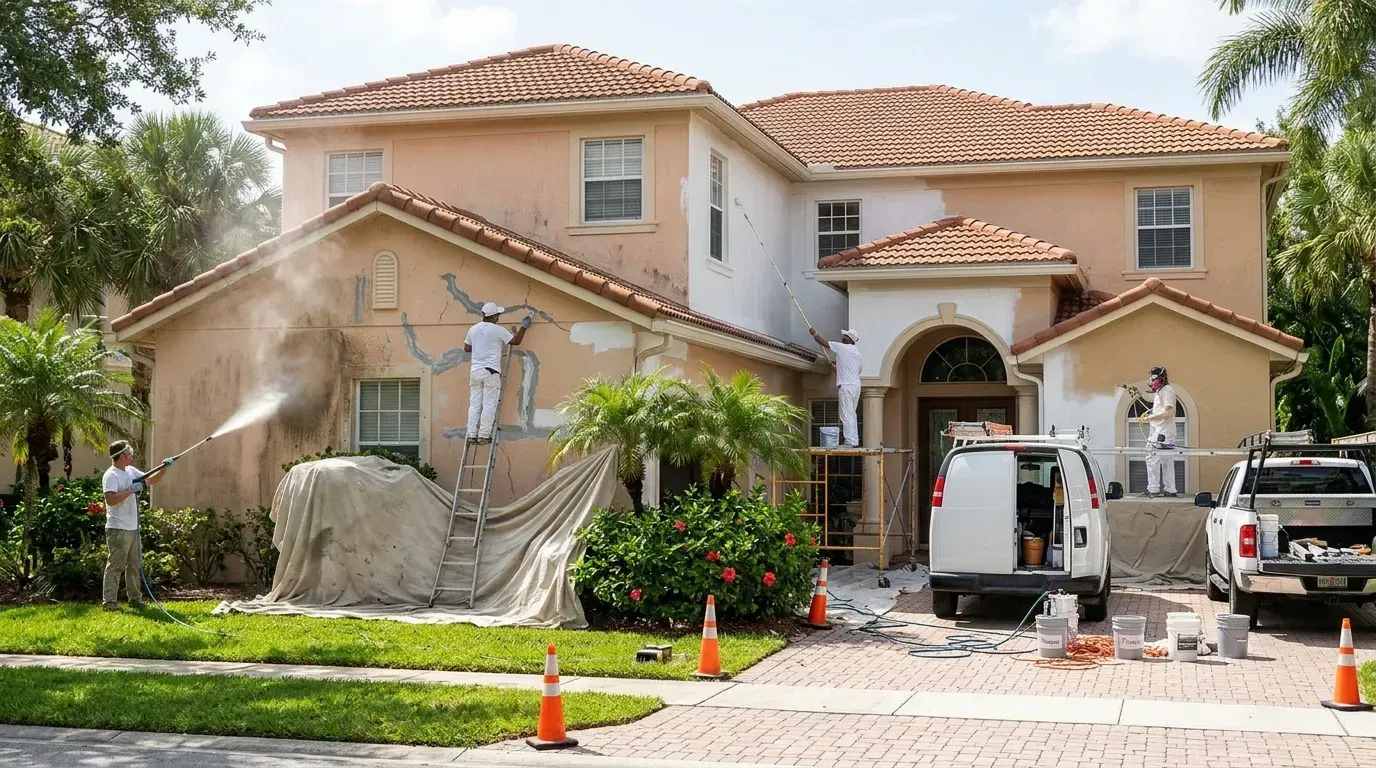
Moisture problems should be repaired before painting because trapped water keeps feeding blistering, efflorescence, and adhesion failure even under fresh film, so the finish fails early and indoor air quality can suffer in humid Dunedin, FL homes. Soft drywall, musty odors, and recurring rings after storms are clear stop signs. Our house painting services start with finding the source, not hiding it. For stucco, follow the same order used in painting stucco homes in Florida with attention to cracks, cleaning, priming, and coatings. The team method pairs drying and repair with the right primers. Ready for a walkthrough? Contact us to schedule an inspection.
Which moisture signs mean you still cannot paint over moisture damage?
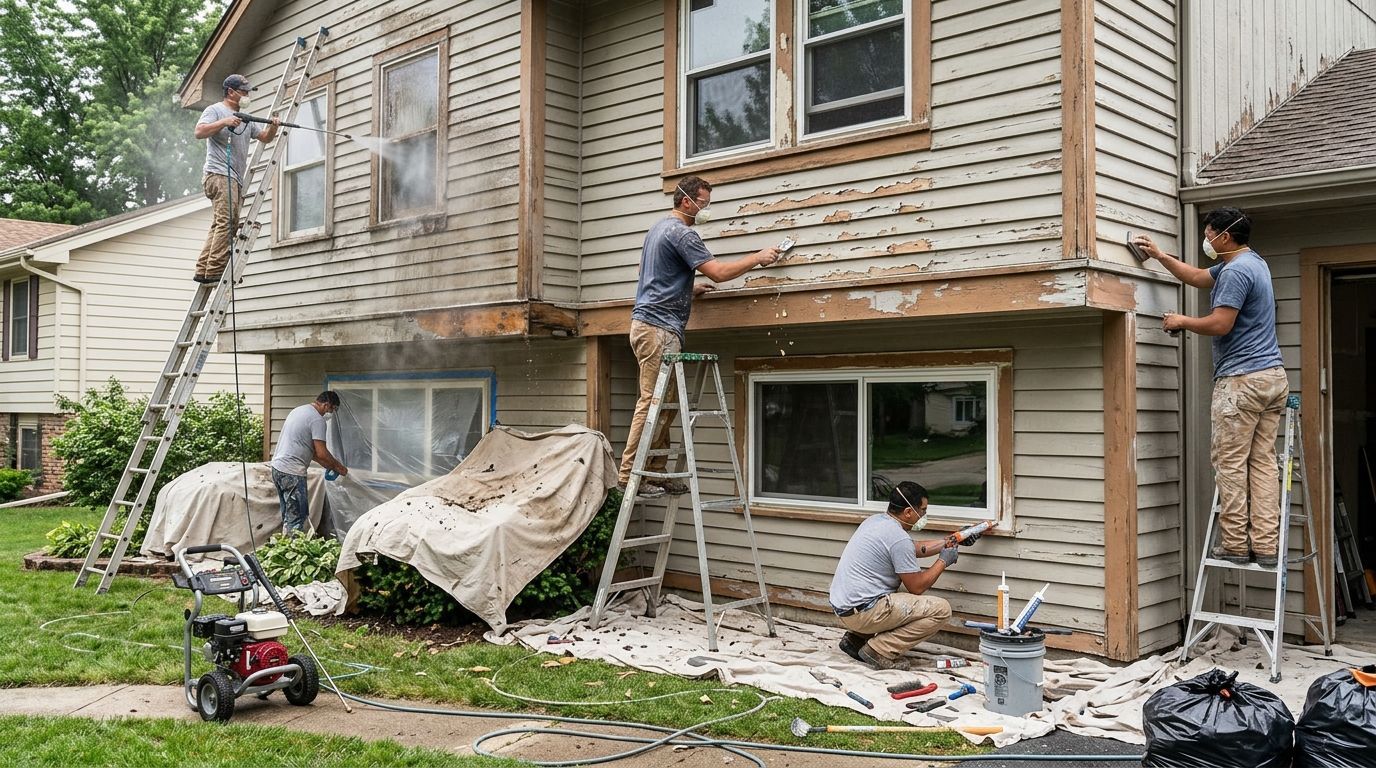
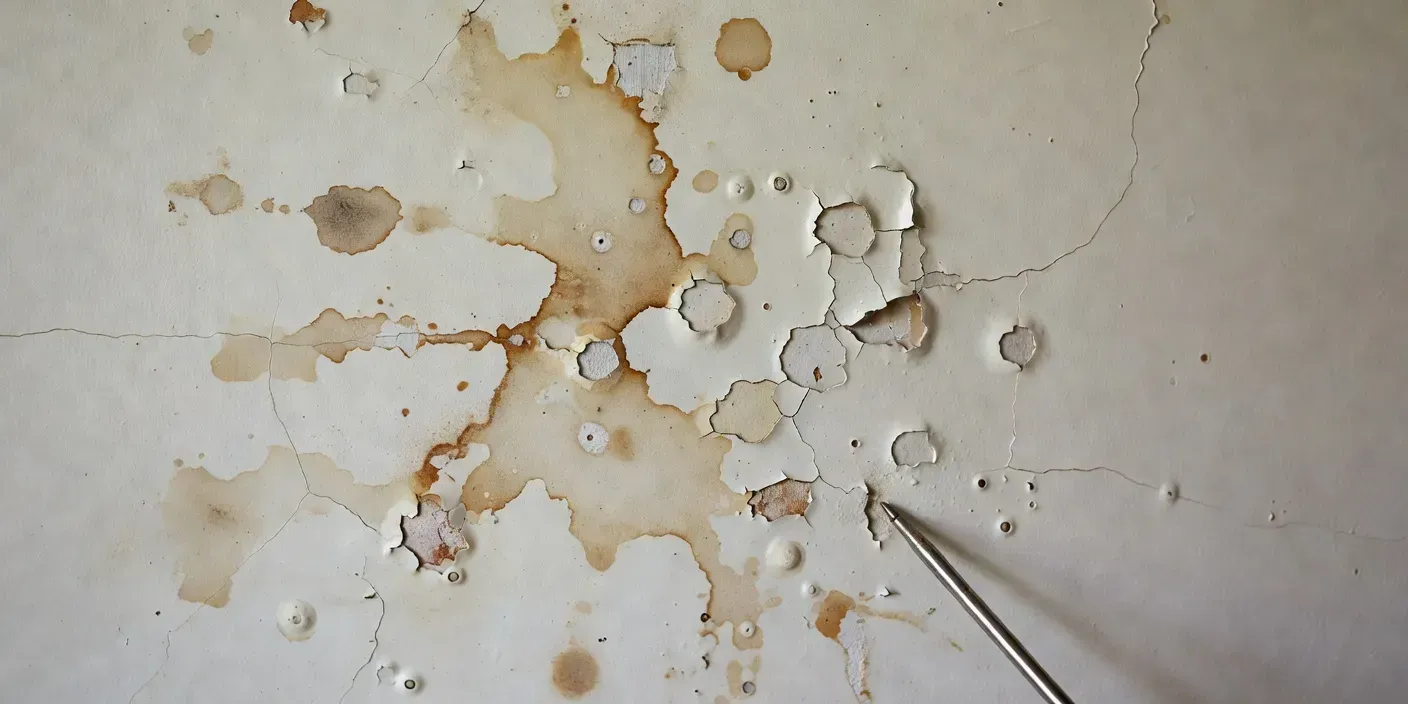
You still cannot paint over moisture damage when walls stay soft, cool to the touch, stained after drying, or show blistering, peeling, or white chalky salts, because coating wet or unstable substrate traps vapor, weakens bond, and brings the same failures back after Dunedin, FL rain and humidity cycles rather than lasting through a full season. Soft spots and brown rings point to active or recent water in drywall or plaster. Bubbling latex and lifting edges show the film already lost grip. Musty odor near baseboards often tracks hidden damp behind paint. Efflorescence on masonry means salts riding moisture to the surface.
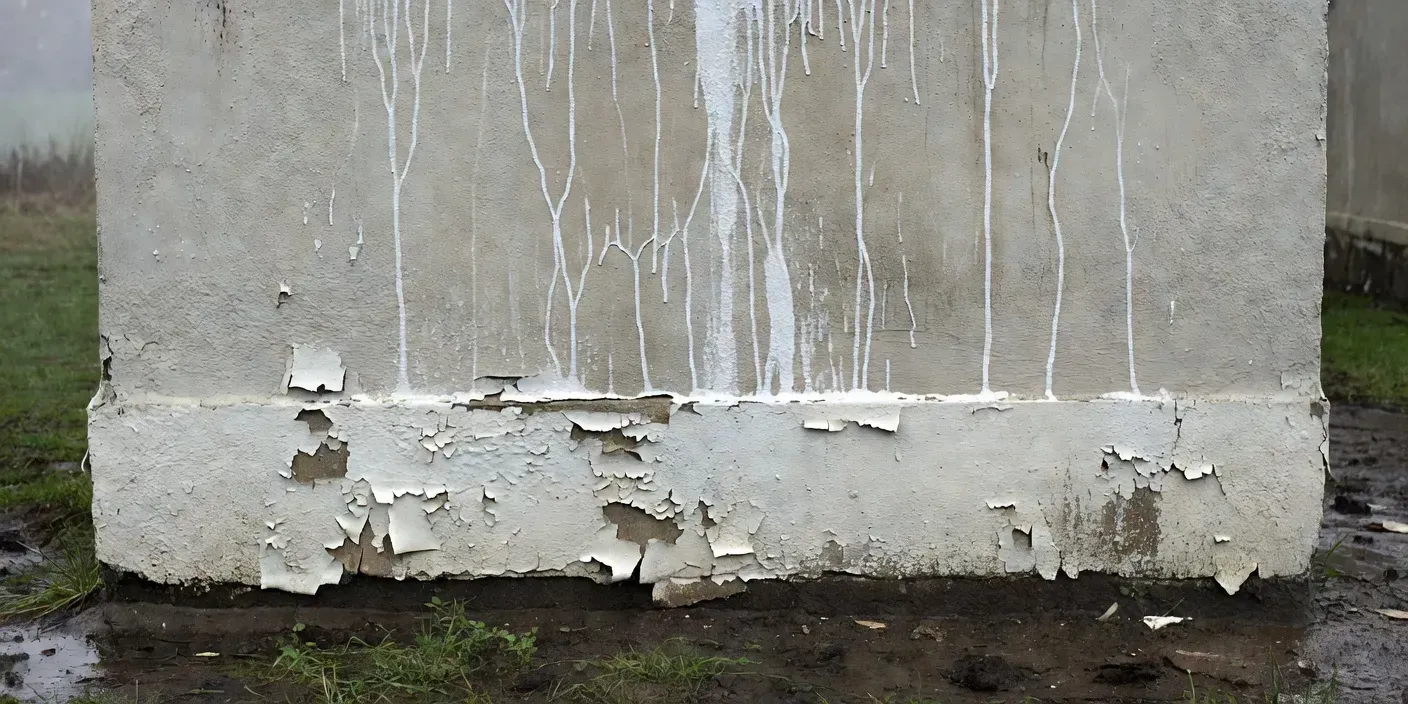
SignBest for spottingWatch-outSoft or spongy drywallActive leaks behind interior paintPrimer will not harden a wet coreBrown or yellow stainsPast water paths on ceilings and wallsStains can bleed through cheap topcoatsBlisters and peelingFailed bond from vapor pressureScraping alone skips source repairWhite chalky saltsMoisture moving through stucco or blockSealing salts in locks damp underneath
In coastal Pinellas weather, check joints, window pans, and wall bases before any film goes on. Covering symptoms wastes labor when the next storm reactivates the path. Dry fully, fix the leak, replace ruined board, then prime only sound substrate so the finish holds.
Should You Paint Over Moisture Damage or Repair First?
You should not paint over moisture damage; dry the substrate, stop the leak, replace soft material, and only then prime sound surfaces so coastal humidity does not push vapor through a fresh film and recreate blisters, stains, and peeling in Dunedin, FL homes and rentals.
Repair first because latex and acrylic films need a stable, dry bond line. Trapped damp keeps salts moving and softens paper face on drywall. A thin topcoat cannot bridge a wet core or seal active paths at windows and baseboards.
Compare approaches by outcome, not speed. Spot-painting over brown rings may look clean for a week. After rain, the same rings often reappear and edges lift. Full prep costs more hours up front and protects the finish through a season.
Stucco skirts and block need extra care after storms. White salts signal moisture still traveling. Pair wall drying with exterior crack and coating work described in
Painting Stucco Homes in Florida: Cracks, Cleaning, Priming, and Coatings so the shell and interior stay aligned.
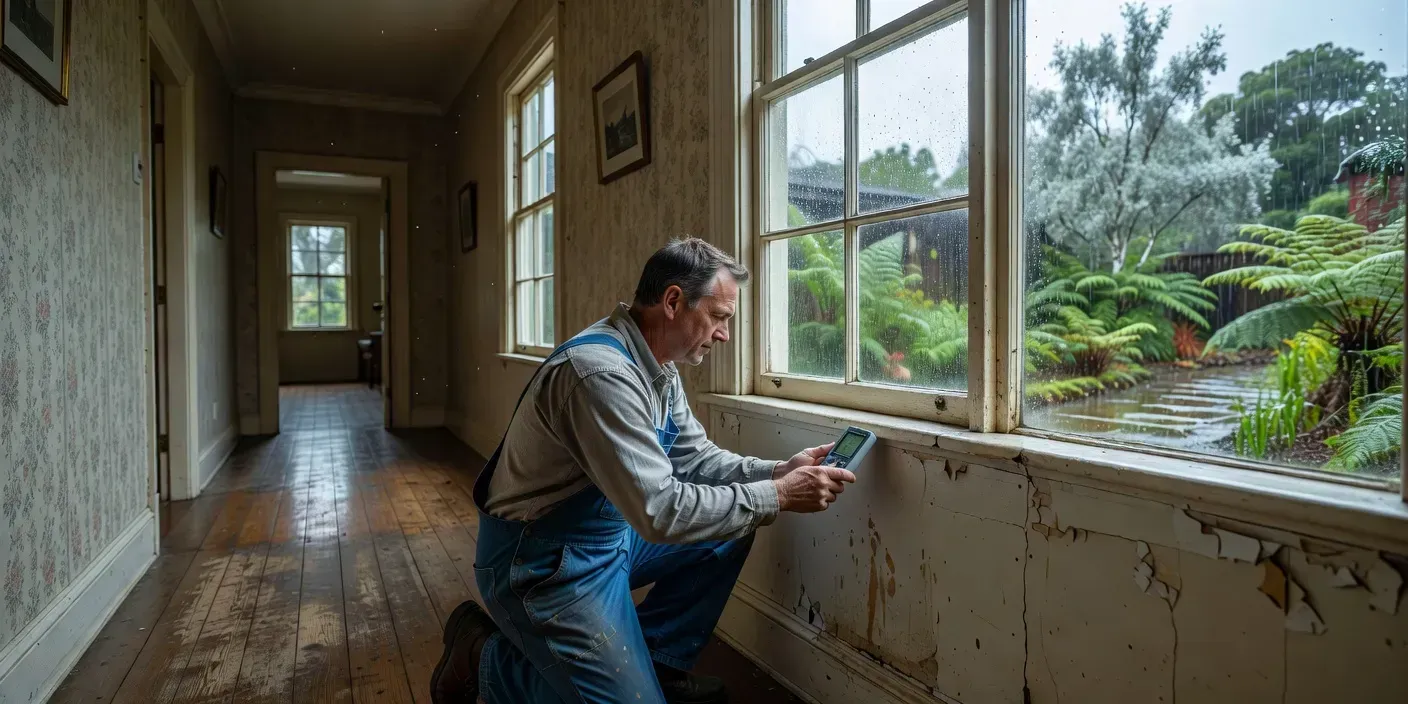
Landlords and small businesses gain fewer callbacks when sources are fixed before color. Our house painting services sequence inspection, drying, board replacement, and priming on verified Dunedin-area jobs. The local painting team documents soft spots and salts so nothing is buried under primer. When moisture signs are clear, schedule drying and repair, then finish. Take the next step through contact for a Dunedin moisture-and-paint review before any coat goes on wet substrate.
Frequently Asked Questions
Can you paint over moisture damage once stains look dry?
No. Surface dryness does not mean the substrate is stable enough to paint over moisture damage. Trapped dampness in Dunedin, FL drywall or plaster can still feed mold, blister new film, and push stains through primer. Confirm meter readings, fix the leak path, replace soft board, then prime with a stain-blocking system before finish coats.
Why moisture problems should be repaired before painting exterior or interior walls?
Repair first because coatings seal in active water rather than stop it. In coastal humidity, unresolved seepage lifts edges, chalks stucco salts, and shortens film life. Addressing why moisture problems should be repaired before painting protects adhesion, indoor air quality, and your investment across wet seasons common to Pinellas County homes and rentals.
What should I check for water damage before painting a Dunedin rental unit?
Inspect ceilings under baths, window returns, baseboards, and AC closets for soft spots, musty odor, bubbling paint, and white mineral deposits. Document meter readings after rain. Correct water damage before painting so tenants are not left with recurring rings, peeling trim, or callbacks that erase the value of a fresh color job.
Preferred Source on Google Search
Add dunedinhousepaintingcompany.com to customize your search feed across Top Stories.