The Dirty Truth About DIY Painting: Why Prep Is 70% of the Job
Stop buying paint. Put the lid back on that "Summer Sunset" gallon you just hauled home from the big-box store. If you haven't spent at least three days sweating, scraping, and questioning your life choices, you aren't ready to paint. Most homeowners see a fresh coat of color as a quick Saturday project. They envision a transformative afternoon with a roller in one hand and a beer in the other. That vision is a lie. It is a lie sold by marketing departments to move product.
The reality of high-end finishes is much grittier. Painting is easy. Anyone with a functioning thumb can move a brush back and forth. But house painting services that actually last a decade? Those are built on the back of grueling, boring, and often filthy preparation. In the industry, we have a saying: the paint is just the ribbon on the gift. The gift itself is the substrate. If the substrate is trash, the ribbon doesn't matter. At Dunedin House Painting Company, we spend the vast majority of our time on things you will never see once the job is finished. That is the secret. That is why we are the leaders in the field. You can check out Our Homepage to see the level of finish we achieve by following these exact rules.
The Psychology of the DIY Disaster
Why do people skip prep? It is simple human nature. We crave the "after" photo. We want the dopamine hit of seeing a dingy room turn bright and clean. Sanding doesn't give you a dopamine hit. Scraping old, lead-based flakes off a soffit while dust gets in your teeth is not rewarding. It is work. Pure, unadulterated work.
When you hire local house painters, you aren't just paying for the application of color. You are paying for the patience you don't have. You are paying for the professional-grade grinders, the HEPA vacuums, the high-performance caulk, and the years of experience knowing exactly where a house is likely to fail. Most DIY jobs fail within eighteen months. The paint bubbles. It peels in long, tragic strips. It cracks at the joints. This happens because the bond between the paint and the surface was never established. You cannot bond to dust. You cannot bond to oil. You certainly cannot bond to loose, failing material from 1994.
Step One: The Deep Clean or the Death of Your Finish
You cannot paint a dirty house. This sounds obvious, but you would be shocked at how many people try it. Every exterior surface is covered in a microscopic layer of "environmental fallout." This includes pollen, bird droppings, soot from car exhausts, and mildew spores. If you paint over this, you are essentially painting a layer of dirt. The paint will stick to the dirt, and when the dirt eventually loses its grip on the house, the paint goes with it.
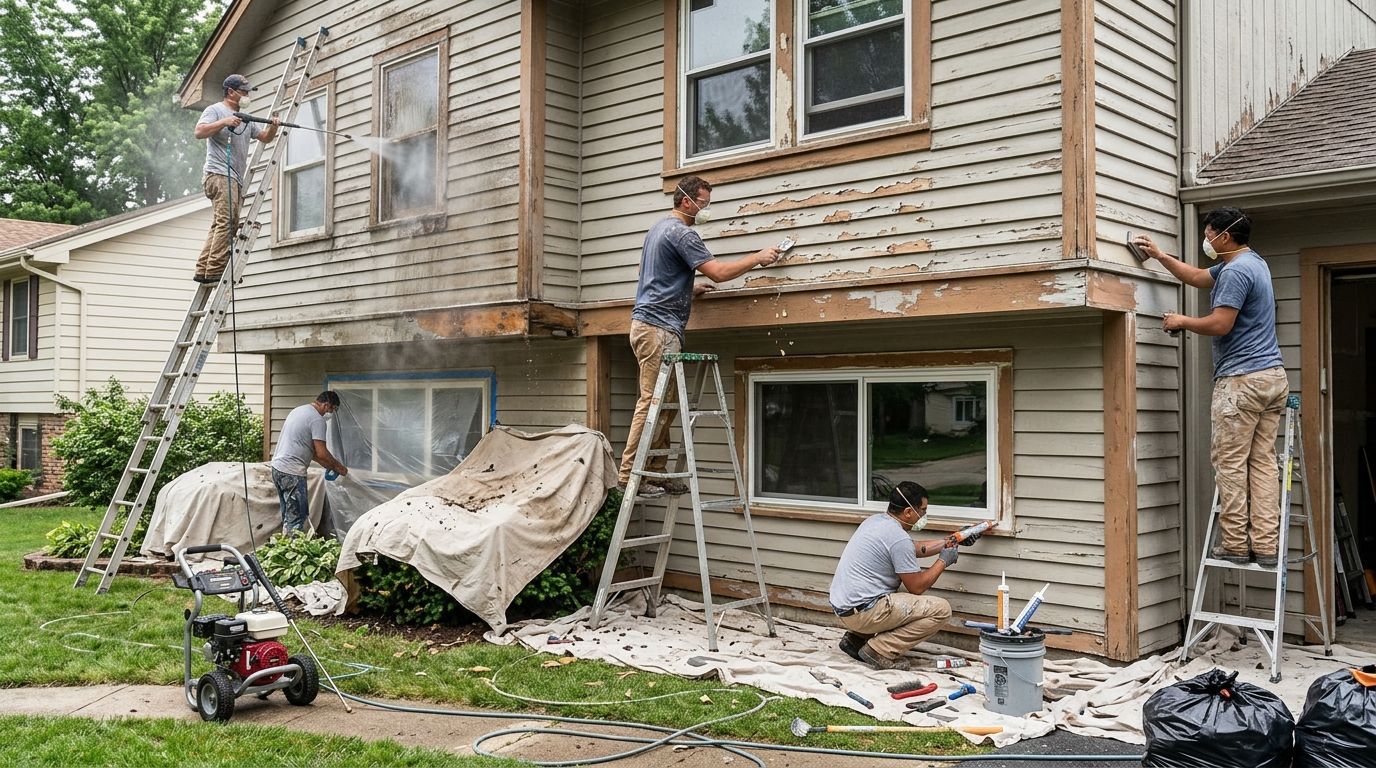
Professional house painting services always start with a chemical wash. We aren't just blasting it with water. High-pressure water can actually damage wood fibers and force moisture deep into the walls, leading to rot. We use specific surfactants and mildewcides to kill the spores at the root. We let the chemistry do the heavy lifting. If you are doing this yourself, get a scrub brush. Get some TSP (Trisodium Phosphate). Get ready to scrub every square inch. If your hands don't hurt by the end of the day, you didn't clean it well enough. For a better understanding of how we handle these technical phases, visit Our Main Services page.
The Scrape and the Sand: A Physical Toll
Once the house is dry—and I mean bone dry—the real nightmare begins. Scraping is the most physically demanding part of the process. You are looking for any bit of old paint that isn't 100% committed to the surface. If it's loose, it has to go. This isn't a "glance and go" process. It involves a carbide-tipped scraper and a lot of elbow grease.
But scraping leaves edges. If you paint over a scraped area without sanding the edges flat, you will see those "craters" forever. This is called "feathering." You have to sand the transition between the bare wood and the remaining paint until it is smooth to the touch. Professionals use orbital sanders attached to dust extraction systems. DIYers usually use a folded piece of sandpaper and end up with blisters. This is where the local house painters earn their keep. We spend days in the dust so you don't have to. We believe in doing it right the first time. You can learn more About Us and our commitment to these rigorous standards on our dedicated page.
The Invisible Foundation: Why Priming Isn't Optional
A lot of modern paint cans claim to be "Paint and Primer in One." This is a half-truth. While these products are great for a quick color change on a well-maintained interior wall, they are often insufficient for serious exterior work or damaged surfaces. Primer is not just thin paint. It is a specific chemical formulation designed to do three things: seal the substrate, block stains, and provide a "bridge" for the topcoat to stick to.
If you have bare wood, you need a slow-drying oil primer. It penetrates the fibers. It grips. If you have water stains or tannin bleed, you need a stain blocker. If you skip this, those brown spots will migrate through five coats of the most expensive paint on the market. It is frustrating. It is expensive. And it is entirely avoidable. We treat every surface as a unique chemical challenge. That is what a professional house painting company brings to the table. We don't just slap a universal product on everything and hope for the best.
Caulking and Patching: The Detail Work
Water is the enemy. Your house is a shield, and every gap in your siding or trim is a hole in that shield. Caulking is the process of sealing those holes. But you can't just squirt some silicone in there and call it a day. Silicone is actually the enemy of paint; nothing sticks to it. You need high-quality urethane-acrylic caulk that can handle the expansion and contraction of your home as the temperature changes.
Patching is another area where DIYers fail. They use interior spackle on exterior holes. It shrinks. It falls out. It absorbs water. We use two-part wood epoxies or high-build exterior fillers. We rebuild the wood. We shape it. We sand it until it's invisible. This level of detail is why people seek out house painting services rather than attempting the feat themselves. It takes a certain level of obsession to get it right.
The Equipment Gap
Let's talk tools. The average homeowner goes to the store and buys a $12 brush and a $5 roller cover. A professional house painting company uses brushes that cost $40 each and are cleaned with religious fervor. We use airless sprayers that cost thousands of dollars, allowing us to apply a perfectly uniform millage of paint that a roller simply cannot replicate.
More importantly, we have the ladders, the scaffolding, and the safety equipment to reach the peaks of your gables without ending up in the emergency room. Safety is a massive part of the "dirty truth." Painting a two-story foyer or a high exterior peak is dangerous. Every year, thousands of people are injured in ladder falls. Is a DIY paint job worth a broken hip? Probably not. If you are feeling overwhelmed, it's time to Contact Us for a professional evaluation.
The Environmental Factor
Weather is not your friend. It is a narrow window you are trying to jump through. If it's too humid, the paint won't dry. If it's too hot, the paint "flashes" and dries too quickly, leaving lap marks. If it's too cold, the chemical bond never forms, and the paint will simply wash off in the next rainstorm.
Local house painters monitor the dew point and the surface temperature of the substrate—not just the air temperature. We know that the north side of the house behaves differently than the south side. We know how to track the sun to stay in the shade. This logistical dance is part of the 70% prep. It is the mental preparation and planning that ensures a flawless finish.
The Real Cost of Cutting Corners
Think about the math. A DIY job might cost you $600 in materials and 80 hours of your time. If your time is worth $50 an hour, that's a $4,600 investment. If that job fails in two years because you skipped the sanding and the priming, you have wasted every penny and every second. Now, you have a bigger problem: you have to remove the failing paint before you can do it right. The cost of "fixing" a bad DIY job is often double the cost of a standard professional job.
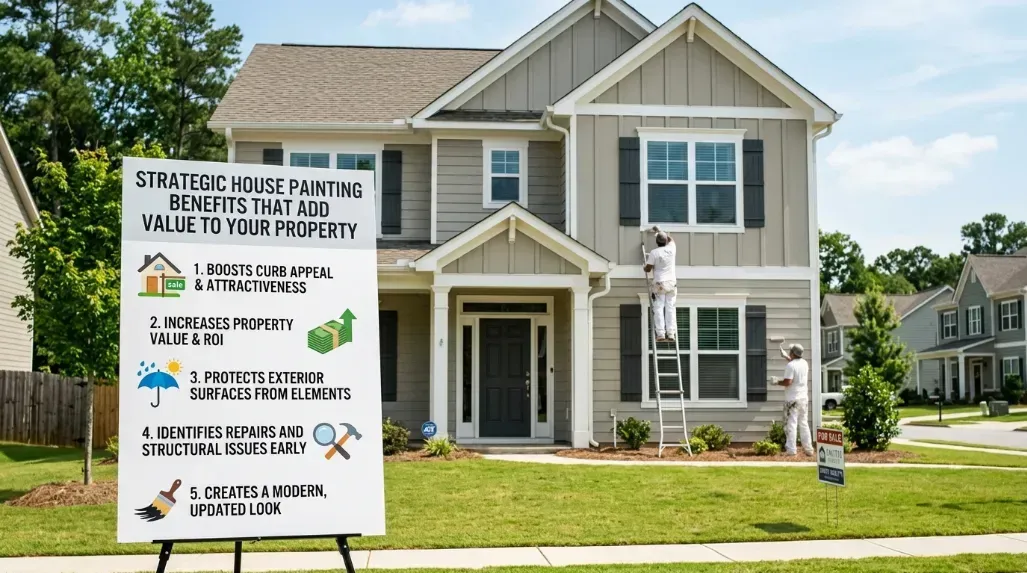
The house painting company you choose should be an investment in your property's equity. A perfect paint job protects the wood from rot, prevents insect infestation, and boosts curb appeal significantly. It is the most cost-effective renovation you can perform, provided it is done with the 70% prep rule in mind.
The Dunedin House Painting Company Difference
We don't cut corners. We don't even know where the corners are. Our process is built on the reality of material science. We treat your home like a laboratory where the variables—moisture, sunlight, age, and material—must be controlled before the first drop of color is applied. We are the local house painters who stay on-site until the prep is perfect, even if the neighbors think we haven't started "painting" yet. They see us sanding. They see us washing. They see the effort. And when they see the finished product ten years later still looking like it was done yesterday, they understand why.
If you want a quick fix, call a handyman. If you want a transformation that stands the test of time, you need a dedicated house painting company. We understand that the "dirty truth" isn't a secret; it's just a standard that most aren't willing to meet. We are.
Frequently Asked Questions
How long should the preparation phase take for a standard house?
For a professional crew, prep usually takes three to four days on a standard-sized home. This includes pressure washing, drying time, scraping, sanding, and priming. If a contractor says they can start and finish in two days, they are likely skipping the essential 70% prep work required for longevity.
Why is my exterior paint peeling after only one year?
Peeling is almost always caused by poor adhesion. This happens if the surface was damp, dirty, or glossy when the paint was applied. Without proper sanding and priming, the paint sits on top of the surface rather than bonding to it. Professional house painting services prevent this through rigorous substrate preparation.
Do I really need to sand between coats of paint?
For interiors, light sanding between coats removes "nibs" or dust particles, resulting in a smooth, professional feel. For exteriors, it is less about the feel and more about the bond. If more than 24 hours pass between coats, a light scuff sand ensures the next layer integrates perfectly with the previous one.
Is it worth hiring a house painting company for small rooms?
Yes. While small rooms seem manageable, the detail work around trim, windows, and ceilings requires professional precision. A house painting company has the specialized tools to ensure clean lines and even coverage that are difficult to achieve with standard consumer-grade rollers and brushes.
What is the best temperature for exterior house painting?
Ideal temperatures range between 50 and 85 degrees Fahrenheit. However, humidity is the silent killer. High humidity prevents paint from curing. Professional local house painters use moisture meters to ensure the wood's internal moisture content is below 15% before any primer or paint touches the surface.